


Tendonitis vs. Tendonosis

Tendinopathy: Broad term for any tendon pain and swelling.
Specific types: Tendonitis vs. Tendonosis

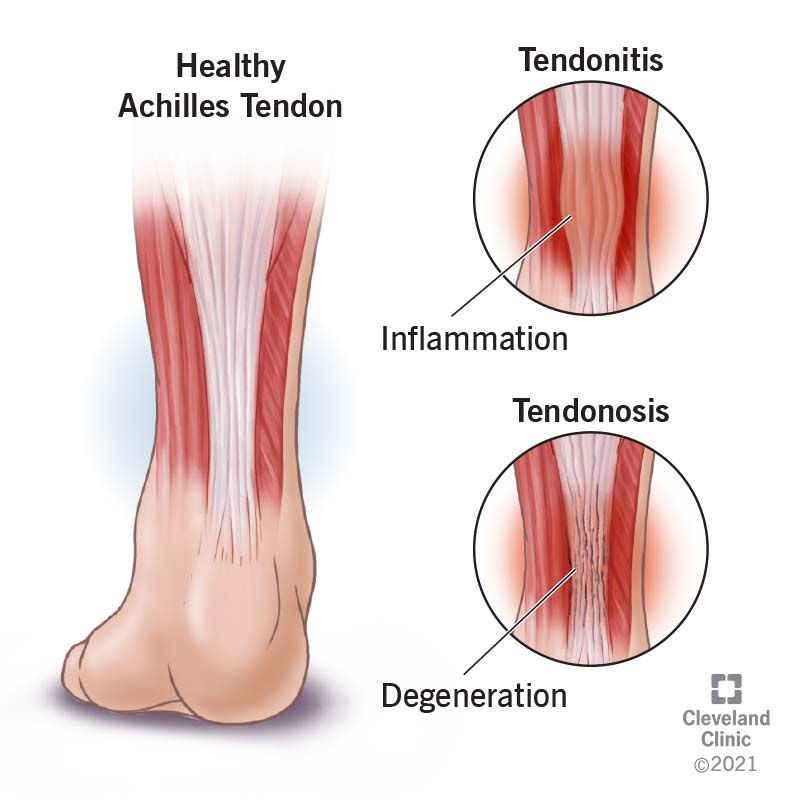
Tendons are thick, fibrous cords that attach the muscle to the bone to help them move as the muscles contract and relax. Tendons help absorb some of the impact from movement. In general they are resistant to tearing but they are not elastic in nature or stretchy. When the tendon is injured it can take a while to heal. Both of these diagnoses are related to issues of the tendon which attaches the muscle to the bone. Tendonitis is an inflammatory condition where tendinosis is more of a degenerative condition.
Tendonitis is more associated with inflammation of the tendon often due to an acute injury or overuse.
Symptoms include pain, swelling and decreased range of motion.
This acute condition can improve with rest and decreasing the overuse or muscle imbalances that contributed to it in the first place.
Treatment includes rest, ice, anti-inflammatory medications, PT. If conservative treatment is not adequate, corticosteroid injections can be another option
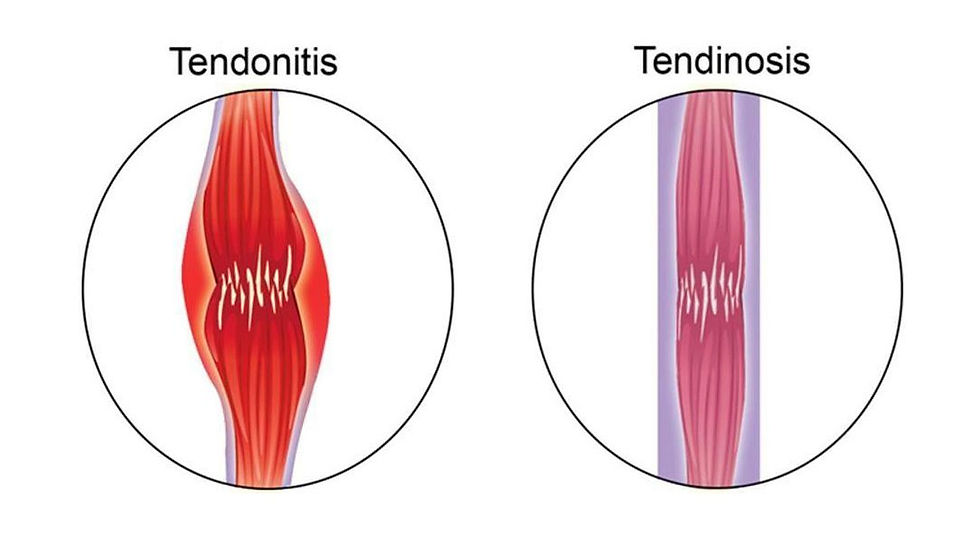
Tendinosis involves more of a degenerative change or breakdown of the tendon fibers again use to overuse but often more of a chronic, long duration or aging.
Symptoms: deep, aching pain in the region along with stiffness
Symptoms are more chronic in nature. Due to the more persistent symptoms, treatment may be in longer duration.
Treatment can include exercises, pain management, correction of any muscle or alignment imbalances that contributed to the tendon irritation over time. Surgery may be required in more severe situations.
So comparing the two diagnoses, tendonitis is more of an acute inflammation due to an injury or overuse whereas tendinosis is more degenerative over a long duration of time. Pain is different in nature. For tendonitis it is generally more acute and swelling and with tendonosis the pain is more deep ache in quality.
Why does it matter to distinguish between the two?
Inflammation can start with a strain, overuse, injuries for a tendonitis.
Tendonosis involved tendon damage as a result of the collage fibers breaking down or degenerating. Then the tendon gets hard, thick and scarred. This can start from trauma, osteoarthritis, aging, repeated movements.
These can happen anywhere but the most common areas is at the elbow, rotator cuff at the shoulder, patellar tendon at the knee and the Achilles tendon at the heel.
Issue | Tendonitis | Tendinosis |
Symptoms | Swelling or tightness Dull ache worse with movement Tenderness to touch | Pain, stiffness, burning sensation Pain when move or touch after activity Decreased range of motion May be a tender lump in the area |
Medical treatments | Corticosteroid injections | Platelet-rich plasma injections Ultrasonic percutaneous tenotomy surgery |
Recovery timeline | 6 weeks healing timeline | months |
PT treatment | Ice, rest, anti-inflammatory treatment, gentle stretching, isometric exercises, manual therapy, activity modification | Progressive loading exercises – more strengthening to promote rebuilding of collagen, tendon strength and tissue remodeling; eccentric exercises / lengthening the muscle, fix underlying biomechanical issues, manual therapy. |
Final Thoughts:
Testing to determine which you are dealing with can include an ultrasound at the doctor’s office.
The key difference from a physical therapy treatment point of view is that with tendonitis you are trying to decrease / address / calm the inflammation. With tendinosis you are trying to rebuild the structure with controlled stresses.
For a physical therapist to determine which you are presenting with, it will be primarily a detailed history.



Comments